Needle Felting for Beginners
Have you been wondering how to get started on your needle felting journey? Look no further! I’ll explain how needle felting works, and what tools you’ll need for your first project.
What is needle felting?
Felting is the process of tangling, matting and pressing animal hair fibers together to create a sculpture or material. Typically this is done with sheep's wool, but many animal fibers can be felted including alpalca, llama, angora rabbit, and mohair (from the angora goat.) Needle felting uses needles that have small barbs that catch the fibers and tangle them together.
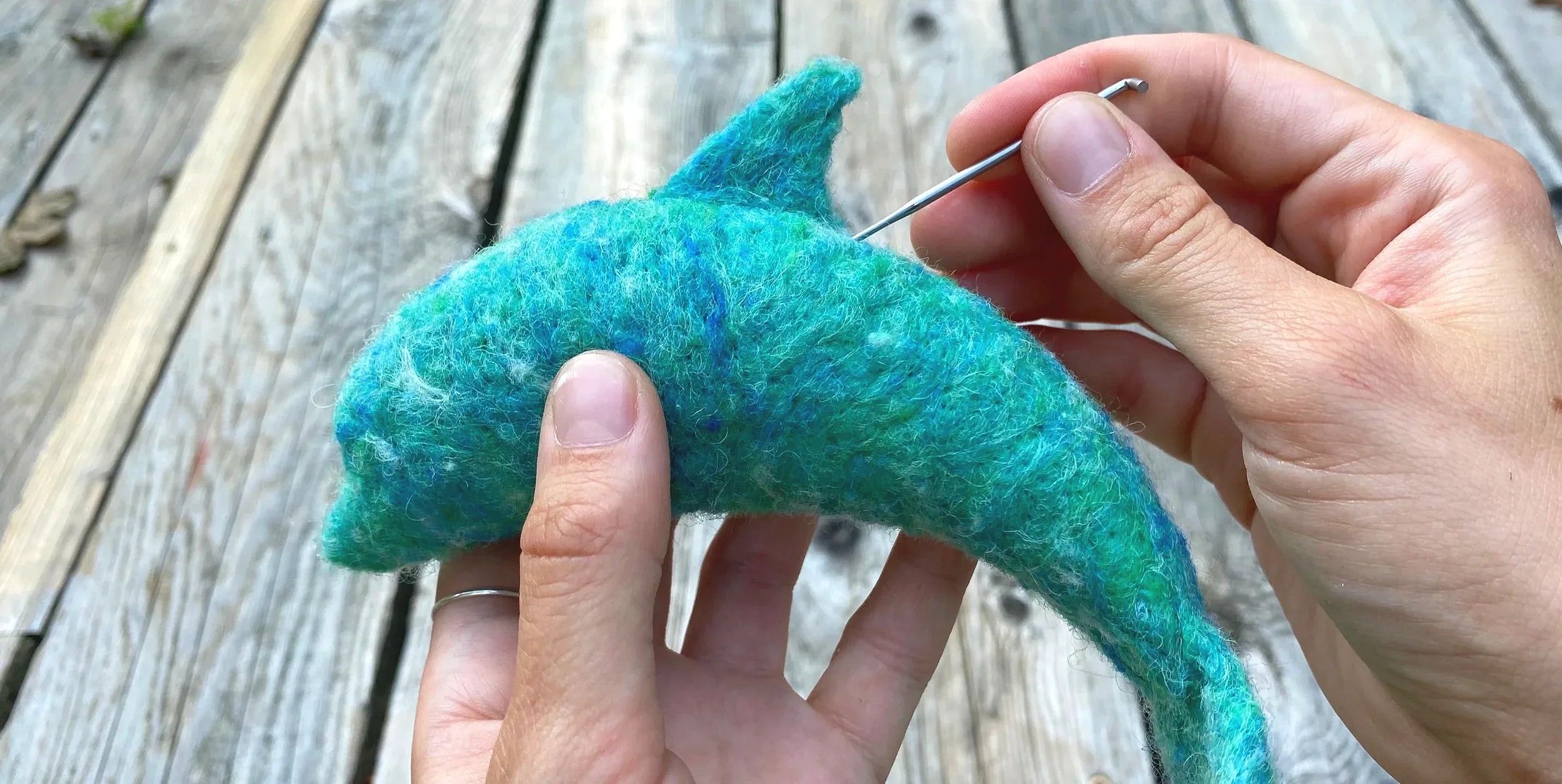
Needle felted dolphin in progress
What do you need to start needle felting?
You just need three things! Needles, wool, and a mat/pad.
Felting Needles:
The most important thing, besides the wool, are felting needles. They come in different sizes, typically from gauge 36 to 40, 36 being the larger hooks (for the beginning stages of shaping a work) and 40 being smaller (for detail work). They also come in different shapes: triangle (the most common), star, and triangle spiral. This refers to the shape of the part of the needle with barbs. Triangle needles have three edges with barbs, star needles have five. This means that there are more barbs on a start needle and the process should go a bit faster. Twisted needles also tangle the wool more efficiently. I like to have some size 40 and 38 needles on hand at all times, and I do the bulk of my felting with 38 gauge needles.
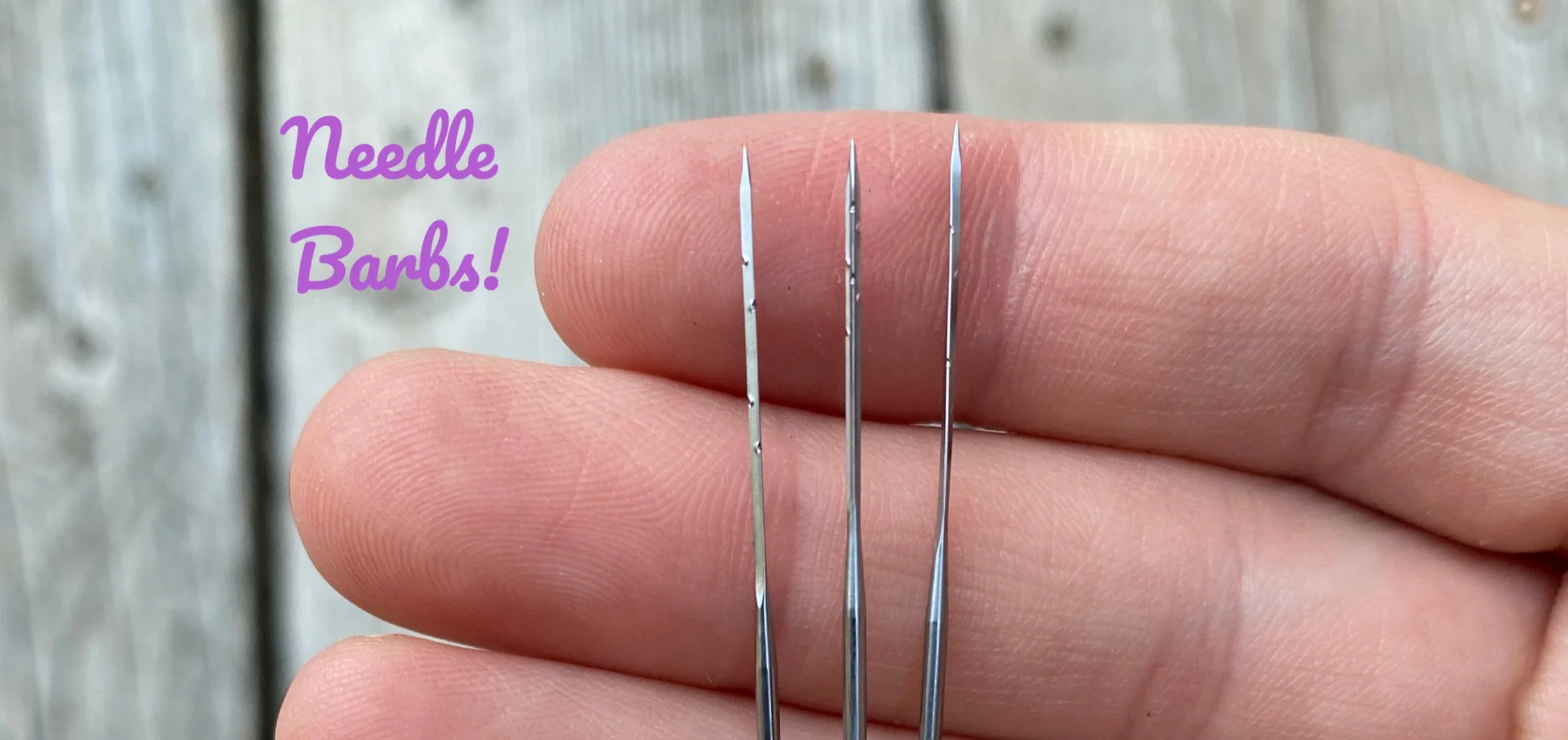
From left to right: Triangle needle, star needle, triangle spiral needle.
However, you should know that not all felting needles are created equal. A kit of needles from Amazon is nearly always lower in gauge than what the label says. A size 40 feels more like a 36. It still works for some things, but for details and medium to small projects you’ll need to use more expensive needles from websites that specialize in needle felting. Some of my favourites are Sarafina Fiber Art, Living wool and Grey fox felting.
You can get a needle holder that holds more needles for faster felting and makes a single needle more comfortable to hold. My favourite one feels like holding a pen and comes with three needles, but there are so many different options! There are also felting needles with a bit of rubber on the handle from Felt Alive that I really like.
Leather finger guards are great to have as well if you want to protect your fingers. They take a bit to get used to, but it will really cut down on how much you poke your fingers!! Here are a few options: Grey fox felting, Sarafina Fiber art, Cupid Falls Farm
US sellers for felting needles:
Sarafina fiber art needle sampler My favourite needles! This sampler includes 10 needles, 2 of each size. You can also buy more of one size, but this way you'll find out which sizes work best for your needs.
Living Felt This is a variety pack so you can see which you prefer! This sampler includes 3 needles, one of each.
Grey fox felting This is a variety pack so you can try out the different sizes and see which one you prefer! This sampler includes 6 needles.
Amazon felting needles This kit includes 80 needles, 20 of each size, and some finger guards. It's under $10. Be warned, they tend to have much bigger barbs compared to the other needles.
Wool Roving or Batting:
Now that you have your needles, you need something to felt. There are a lot of different sheep breeds and ways of preparing wool.
Roving is wool thats been washed and carded (kind of like brushing the wool) and then further processed to remove any shorter fibers and clean out any debris. It becomes a sort of rope but the fibers aren't twisted together, just layed on top of each other so they're all going in the same direction. This means you can pull it apart pretty easily but it will stay together otherwise.
Batting is more of a fluffy mass of wool that's also been washed and carded, but the fibers go in all different directions and the shorter fibers are left in. There may also be small amounts of debris in it you'll have to pick out.
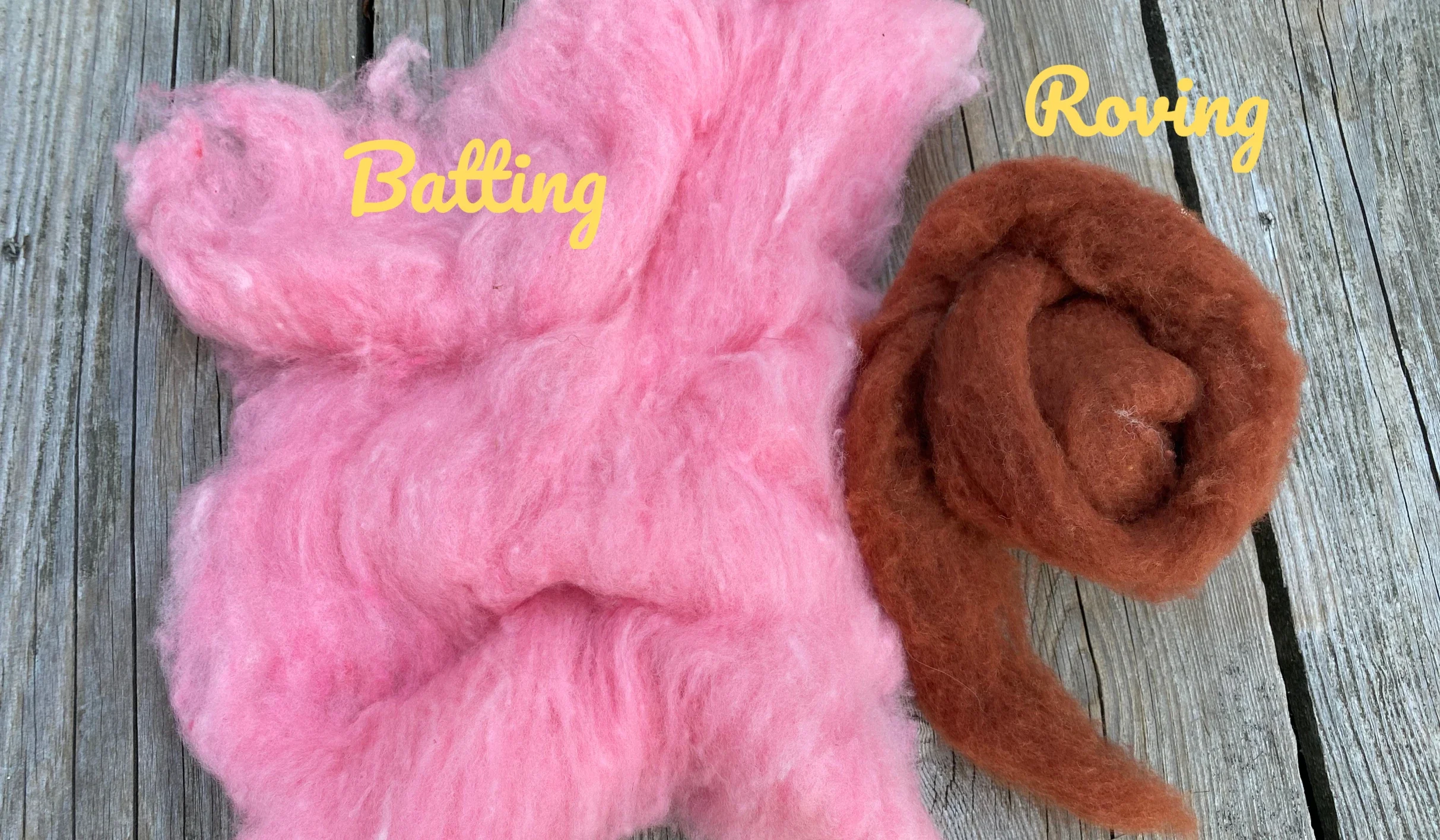
Batting from Felted Sky and core wool roving from Sarafina Fiber Art
I find that batting is easier to work with for needle felting, especially for creating the basic shape. But you can definitely use roving as well!
The second choice you'll need to make is what sheep breed. Some common wool breeds are Merino and Corridale.
My favourite wool to work with is a mix of sheep breeds. It’s called a variety of different things depending on the website you buy it from. On Sarafina Fiber Art its “core wool” on Living Felt, I like the MC-1 fiber, on Grey Fox Felting it’s just called “batting.”
I find Merino roving the most difficult fiber to needle felt because it shows all the needle holes and takes forever to get a smooth finish. However, there are some merino batting mixes that work really well. Corridale roving is ok, but it also takes awhile to get a smooth finish on a piece. By smooth finish, I mean it doesn't show the needle holes or have hard lines from fibers going in one direction or another.
Merino works really well for wet felting though! So if you’re planning on wet felting your piece after needle felting, it would be perfect.
Where to buy wool in the US: (1oz of wool is a lot if you're working on small sculptures)
Sarafina Fiber Art Their core wool is my favourite wool to work with! It's roving, but there are still lots of shorter fibers so it's really easy to use. They don't have a huge selection of colours though.
Grey Fox Felting I love their batting! They have a huge selection of blended colours that are gorgeous. They also have roving in even more colours but I find it a bit more difficult to work with.
Living Felt I love their MC-1 (a merino blend) Felting batts! They're a more expensive which is why I use them less, but they needle felt wonderfully.
Felted Sky More great needle felting wool! They’ve got great wool and lots of colours.
The Felted Ewe A great selection of colours and great for needle felting!
There are also lots of other companies that I have listed on blog posts in the Where to buy supplies section.
A Felting pad:
The needle needs something to go into when you're doing flat felting or working on a section of your sculpture on the board, and you'd probably prefer if it's not your leg. I like to get a grouting sponge from a hardware store, as it’s under $5 and easily accessible. If you don't want to buy anything new there are so many things that could work for this. An old pillow, an old couch cushion (just make sure you're not going to use these again because needles might break off inside them and that would be unfortunate to sit on.) My friend even cut off a corner of her mattress topper to use! However, the best things are foam or a pad of wet felted wool. The downside to foam is that it starts to come apart eventually and little bits of foam get in your projects that you have to pick out. I’ve started repairing my foam boards by felting wool onto them, and that can extend the life quite a bit. Then you have a lovely hybrid felting pad that won't get little pieces of foam in your work anymore and can be whatever size of foam you can find.
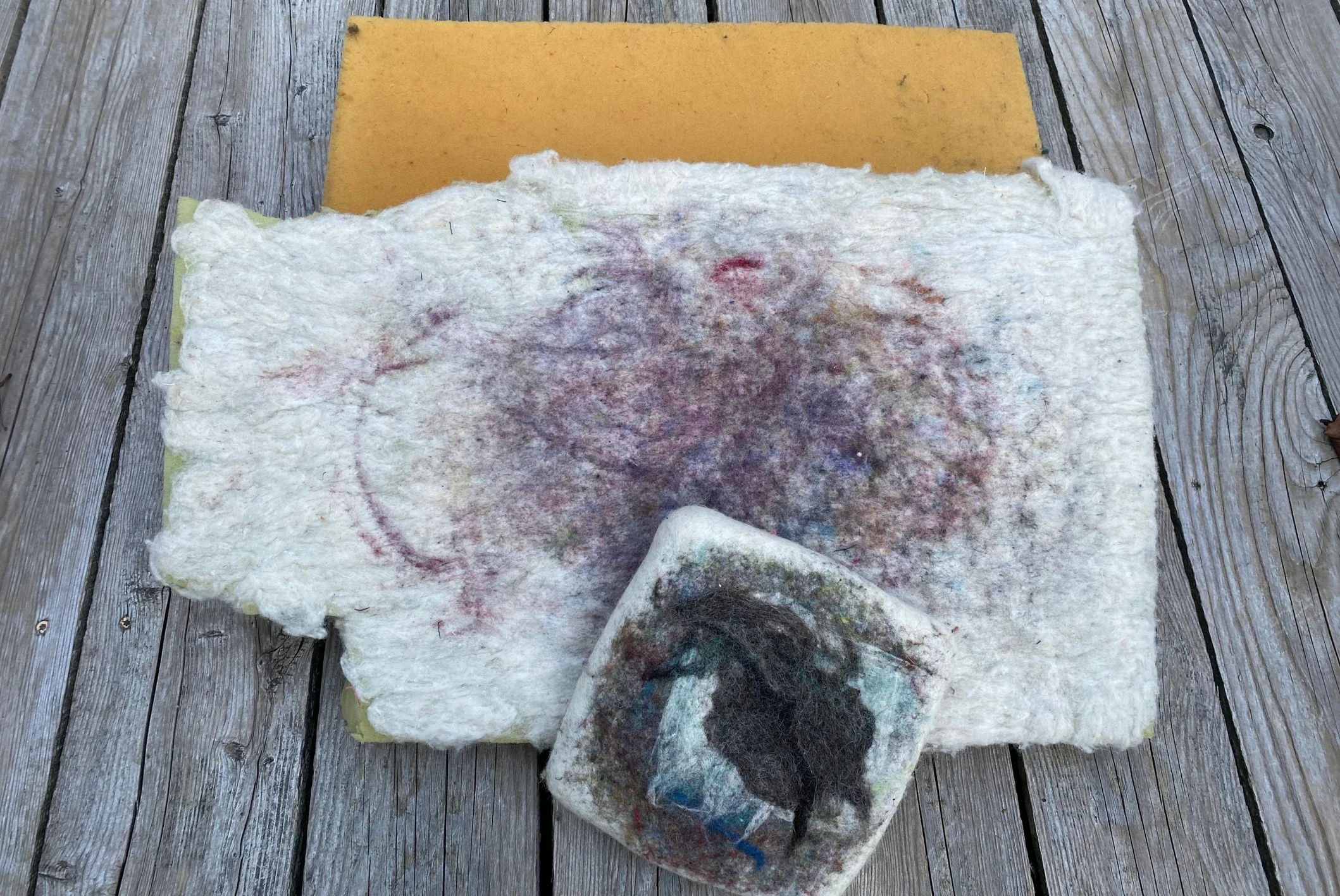
From back to front: a mostly unused piece of foam, a large piece of foam repaired with needle felting, a small pure wool felting board repaired with more wool.
Wool felting pads are just needle and or wet felted wool in the shape of a little square. You could make this yourself, or buy one. The downside to wool is that it's a lot more expensive and it's not easy to find them in larger sizes. So if you want to make a felted painting that's 4ft long you'll probably have to use foam. Wool pads can become unusable when they get too compact and lumpy, although that can be somewhat fixed by adding more wool to it.
If you fix a pad with wool, make sure to felt it down A LOT so the new wool won't get stuck in your projects.
Where to buy felting pads in the US:
Small foam pad from Grey Fox Felting other sizes also available!
Small wool felting pad from Grey Fox Felting other sizes also available!
Large felting pads for felting on clothing etc. Huge variety of sizes and thicknesses available!
A grouting sponge from your local hardware store!
Some other tools/supplies I use:
A felting machine from @feltingmachine.krd on instagram. You can dm on instagram to purchase one, or get it through etsy
Needles from Felt Alive that have rubber on the ends that makes them easier to hold. They’re also colour coded so you’ll never ask what gauge of needle it is again!
I love felting on 1mm pressed wool felt as a backing. I get mine from The Felt Pod.
Wash-away stabilizer from New Brothread
Stick and stitch printable stabilizer by Sulky
Some beginner needle felting tips:
The more you felt your work, the more compact your project becomes. Sometimes a project can become so compact it's not workable anymore. But on the plus side, it'll be super strong.
Change between different gauges of felting needle to see which one is the best for the stage of your project at that moment. If a needle is causing more of an indent than you'd like, use a smaller needle. If it's taking too long or not attaching very well, use a larger needle.
Use core wool for the insides of sculptures to decrease cost. Core wool is also often easier to work with so it might help your projects go faster too!
Needle felt at different angles if you're working on a sculpture. You want to be felting towards the center of the sculpture so the fibers don't start poking out the other side.
Pay attention to the direction of the fibers when you lay them on your sculpture. I try to lay out fibers in the direction the fur would be going if it were a real animal, and then lay some over each attachment point to smooth out any hard lines. Don't be afraid to add more wool!
I hope this helps you get started with needle felting!! Let me know if you have any questions by commenting here, or emailing me at emmadelalaine@protonmail.com
Support my work by donating a couple dollars!